

Athabasca Pass Backpacking
Walking in the Footsteps of Fur Trade Explorers
8 Day Guided Backpacking Adventure, Price TBD For Summer 2026 (Includes Group Gear, Guiding, Permits, Transportation To/From the Trailheads, and boat transport across the Kinbasket Resevoir). See Below For Details.
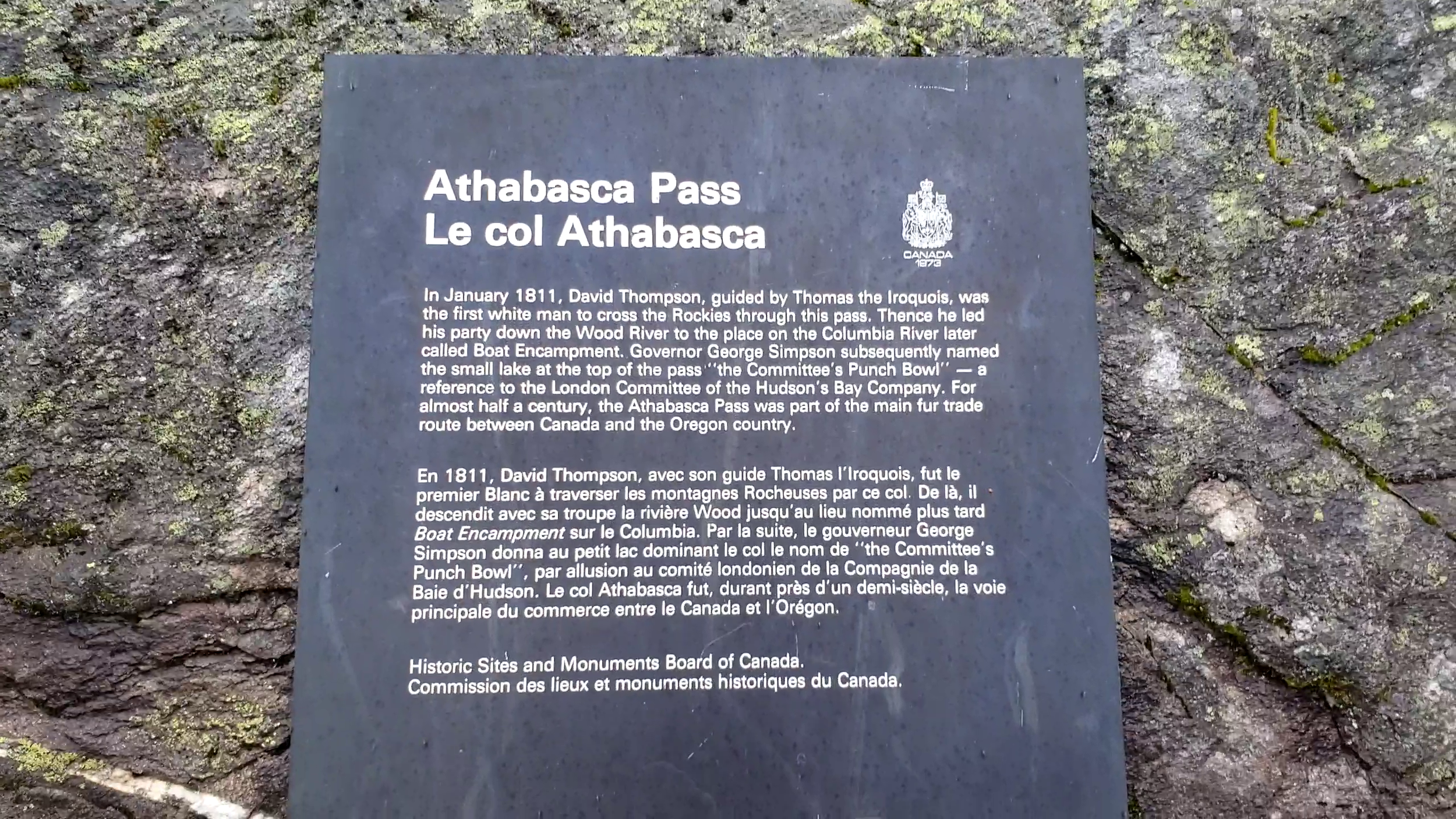
There are few more historic routes in Jasper National Park than the Athabasca Pass Trail. First chronicled by Canada’s famous explorer David Thompson in 1811, this route was used throughout the early to mid 1800s as the main throughfare to reach northern British Columbia. Our route starts in the relative civilization of Moab Lake travelling up the Whirlpool River Valley. The trail and terrain become increasingly wild as we work our way past glaciers, roaring waterfalls, and soaring peaks.
Athabasca Pass itself rises to 1755 metres above sea-level and is home to an enchanting lake known as the Committees Punch Bowl. After reaching the pass, we spend a day exploring the area with excellent views in all directions. We then carry on along David Thompson’s route descending into British Columbia and down towards the Wood River Delta and the Kinbasket Reservoir. A chartered boat brings us across the reservoir where we are driven to the mountain community of Revelstoke. Our journey ends driving back to Jasper (a 6 hour drive travelling through Glacier, Yoho, and Banff National Parks before returning to the Jasper Townsite). This is a rugged route that requires multiple river and creek crossings, and has rustic campground facilities; be prepared for challenging conditions.
Note, for a shorter adventure it is possible to be picked up by helicopter from the BC Side of Athabasca Pass and flown to Valemount BC (1.5 hours west of Jasper); this option adds additional cost, contact us for details if interested.

Basemap obtained from NRCAN NTS Series. Copyright: His Majesty the King in Right of Canada.


Walking in the Footsteps of Fur Trade Explorers
8 Day Guided Backpacking Adventure, Price TBD For Summer 2026 (Includes Group Gear, Guiding, Permits, Transportation To/From the Trailheads, and boat transport across the Kinbasket Resevoir). See Below For Details.
There are few more historic routes in Jasper National Park than the Athabasca Pass Trail. First chronicled by Canada’s famous explorer David Thompson in 1811, this route was used throughout the early to mid 1800s as the main throughfare to reach northern British Columbia. Our route starts in the relative civilization of Moab Lake travelling up the Whirlpool River Valley. The trail and terrain become increasingly wild as we work our way past glaciers, roaring waterfalls, and soaring peaks.
Athabasca Pass itself rises to 1755 metres above sea-level and is home to an enchanting lake known as the Committees Punch Bowl. After reaching the pass, we spend a day exploring the area with excellent views in all directions. We then carry on along David Thompson’s route descending into British Columbia and down towards the Wood River Delta and the Kinbasket Reservoir. A chartered boat brings us across the reservoir where we are driven to the mountain community of Revelstoke. Our journey ends driving back to Jasper (a 6 hour drive travelling through Glacier, Yoho, and Banff National Parks before returning to the Jasper Townsite). This is a rugged route that requires multiple river and creek crossings, and has rustic campground facilities; be prepared for challenging conditions.
Note, for a shorter adventure it is possible to be picked up by helicopter from the BC Side of Athabasca Pass and flown to Valemount BC (1.5 hours west of Jasper); this option adds additional cost, contact us for details if interested.
Basemap obtained from NRCAN NTS Series. Copyright: His Majesty the King in Right of Canada.

Daily Itinerary
-
![]()
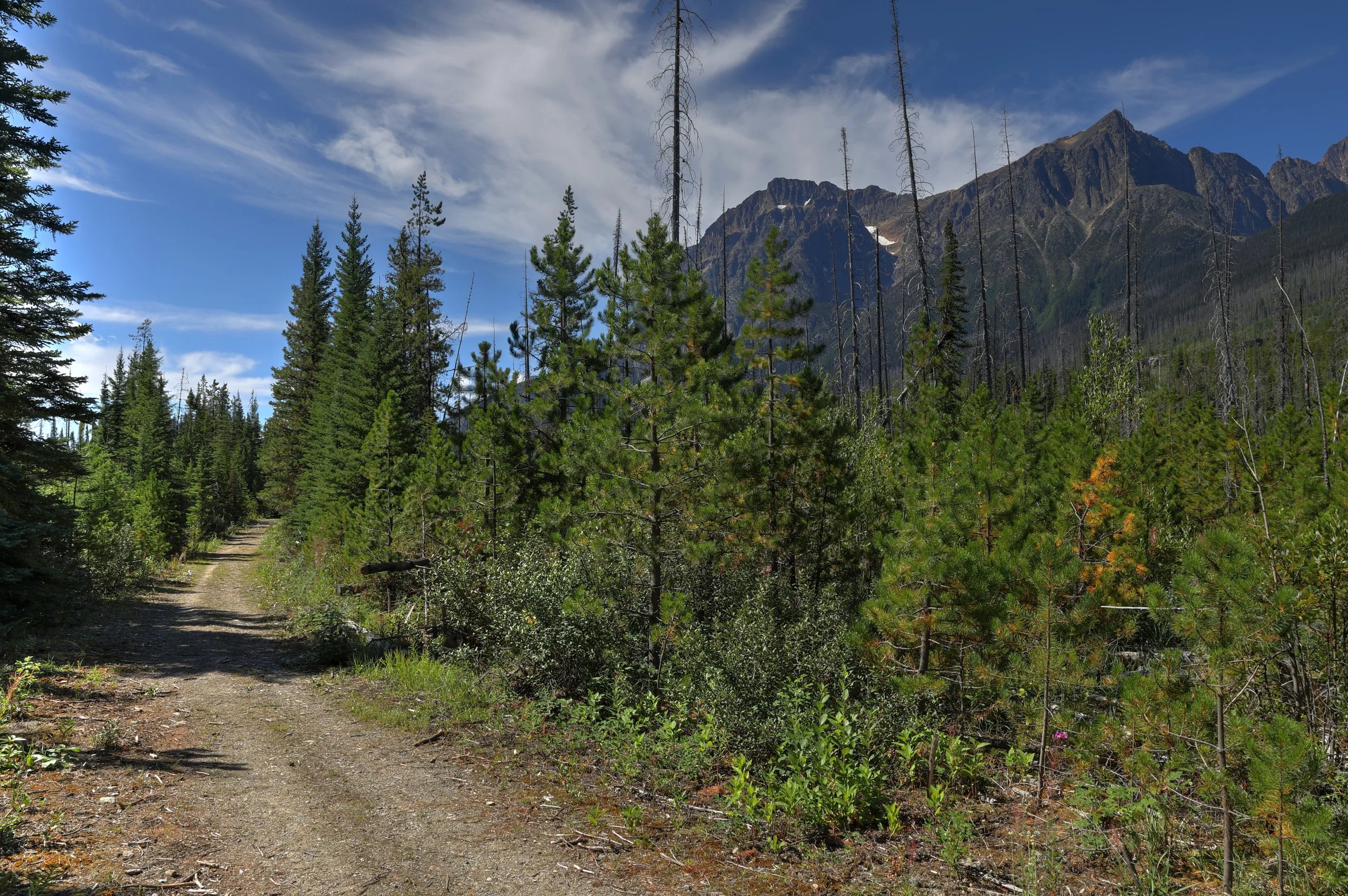
Day 1: Our trip starts in the Jasper Townsite with a morning meeting. Your guide will meet with all guests to discuss safety, and ensure all guests are using appropriate equipment. After the meeting we set off south of the Townsite driving for about 45 minutes to reach the trailhead. Our trip starts of gently, with travel on a wide-gravel road before branching onto a more conventional forested trail. Our first campground is Tie Camp, near the historic ruins of a fur-trade era cabin. [Distance: 12 km. Elevation Gain/Loss: 100 m/40 m.]
-
![]()
Day 2: After waking up to a hearty breakfast we set off on the trail starting off with great views of the Whirlpool River and distant peaks. Our challenge today is crossing Simon Creek, a glacially fed watercourse with a strong and chilly current. On the far side of Simon Creek, the trail becomes more wild as we work our way a further 16 km to the scenic Scott Glacier Campground. [Distance: 20 km. Elevation Gain/Loss: 140 m/20 m.]
-
![]()
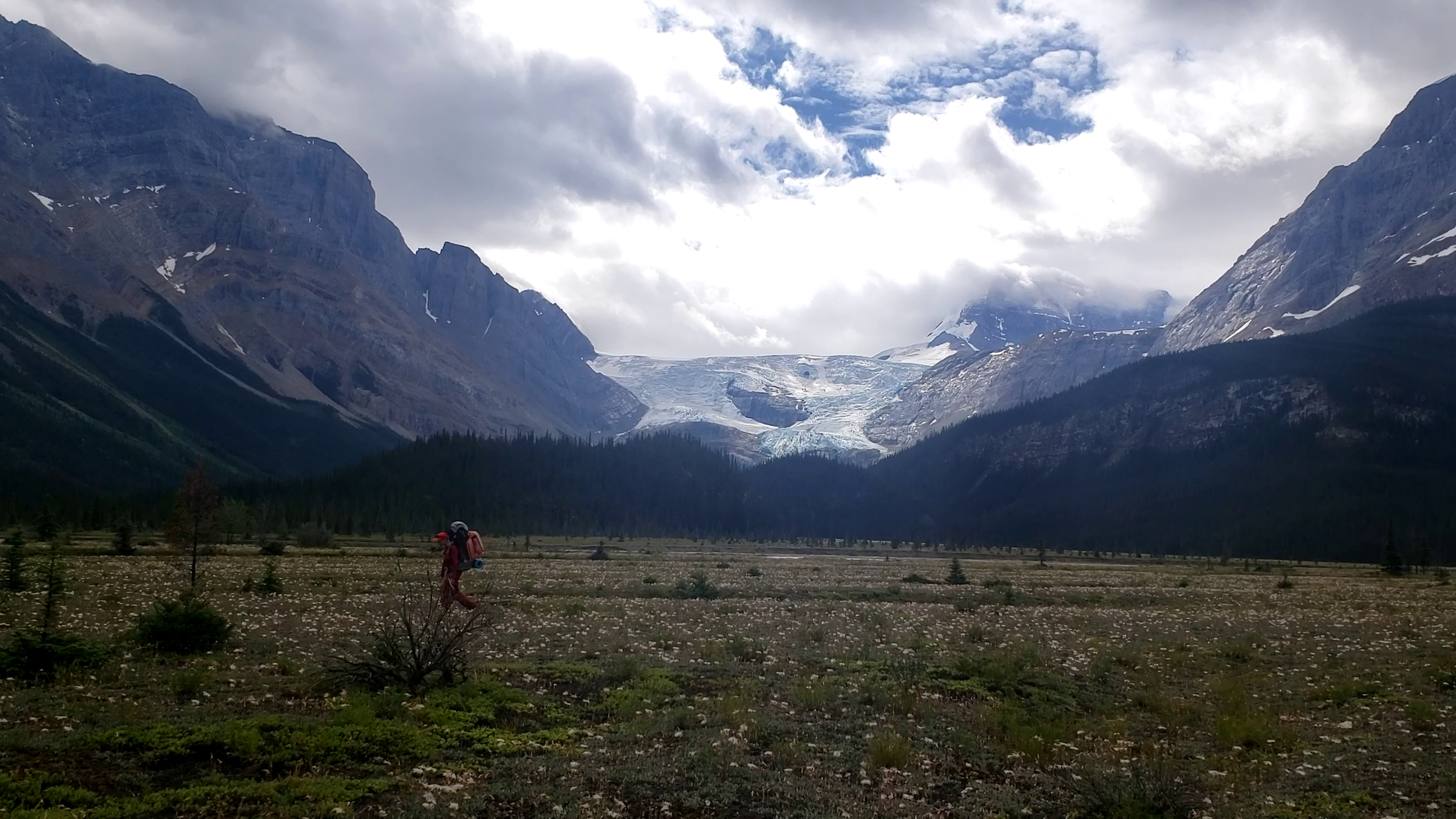
Day 3: After breakfast our morning starts with a side-trip to view the Scott Glacier and the northern edge of the Hooker Icefield (one of a network of icefields that strattle the continental divide that marks the highpoint of the Rockies and the border between Alberta and British Columbia). After our side-trip we pack up our tents and carry on up the Whirlpool River valley passing by a roaring canyon and travelling through interesting undulating forest. Tonight we camp at Kane Meadows, named for renowned painter Paul Kane. [Distance: 11 km. Elevation Gain/Loss: 200 m/30 m.]
-
![]()
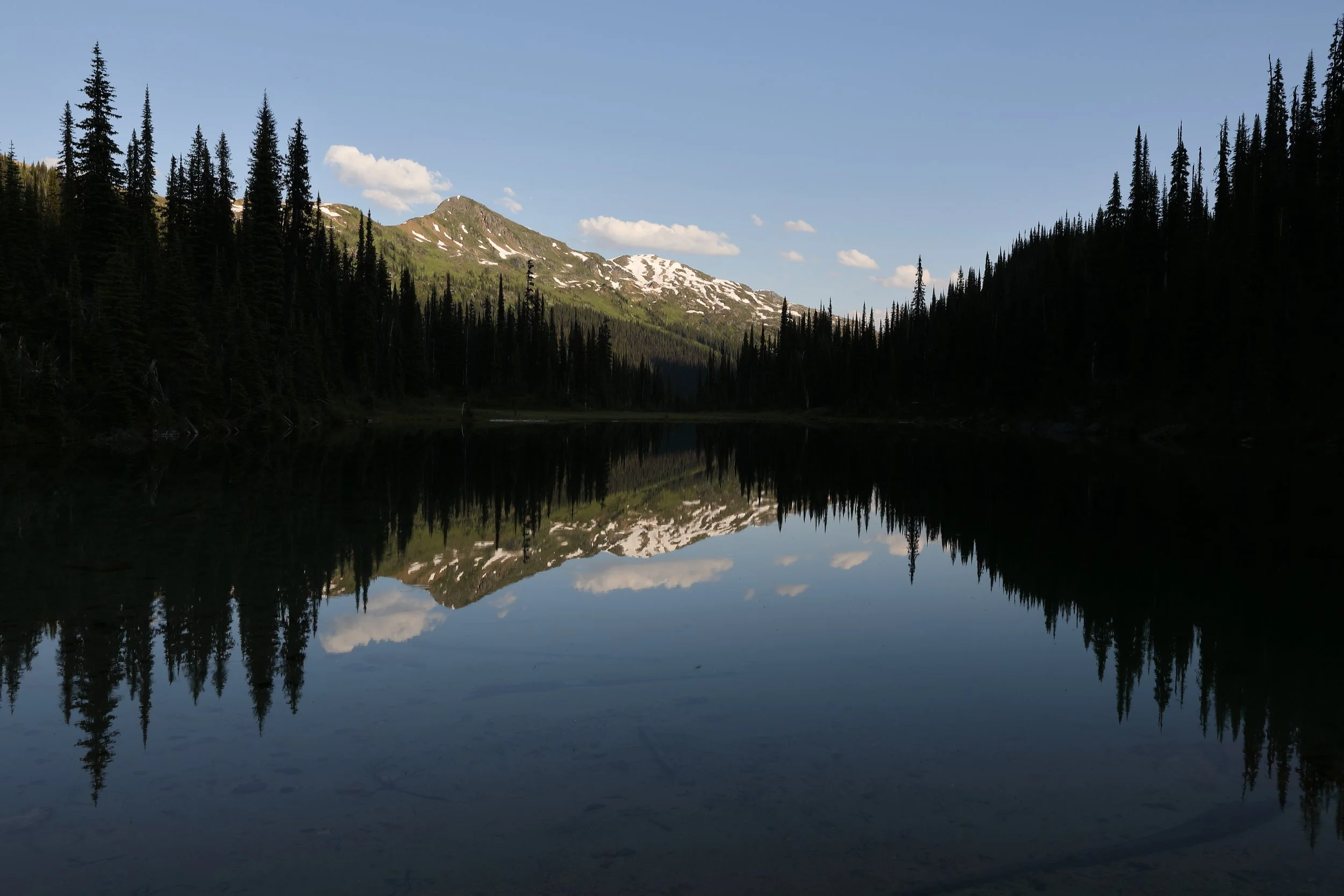
Day 4: On our fourth day of travel we ascend to reach Athabasca Pass itself. Travel can be slow in places and the ground cover can be quite muddy and moist. As we approach the pass there are impressive views looking up towards Mount Brown and Mc Gillivray Ridge, peaks that guard the flanks of the pass. Our camping area is just outside of Jasper National Park on a scenic bench overlooking the Committees Punch Bowl. [Distance: 10 km. Elevation Gain/Loss: 180 m/20 m.]
-
![]()
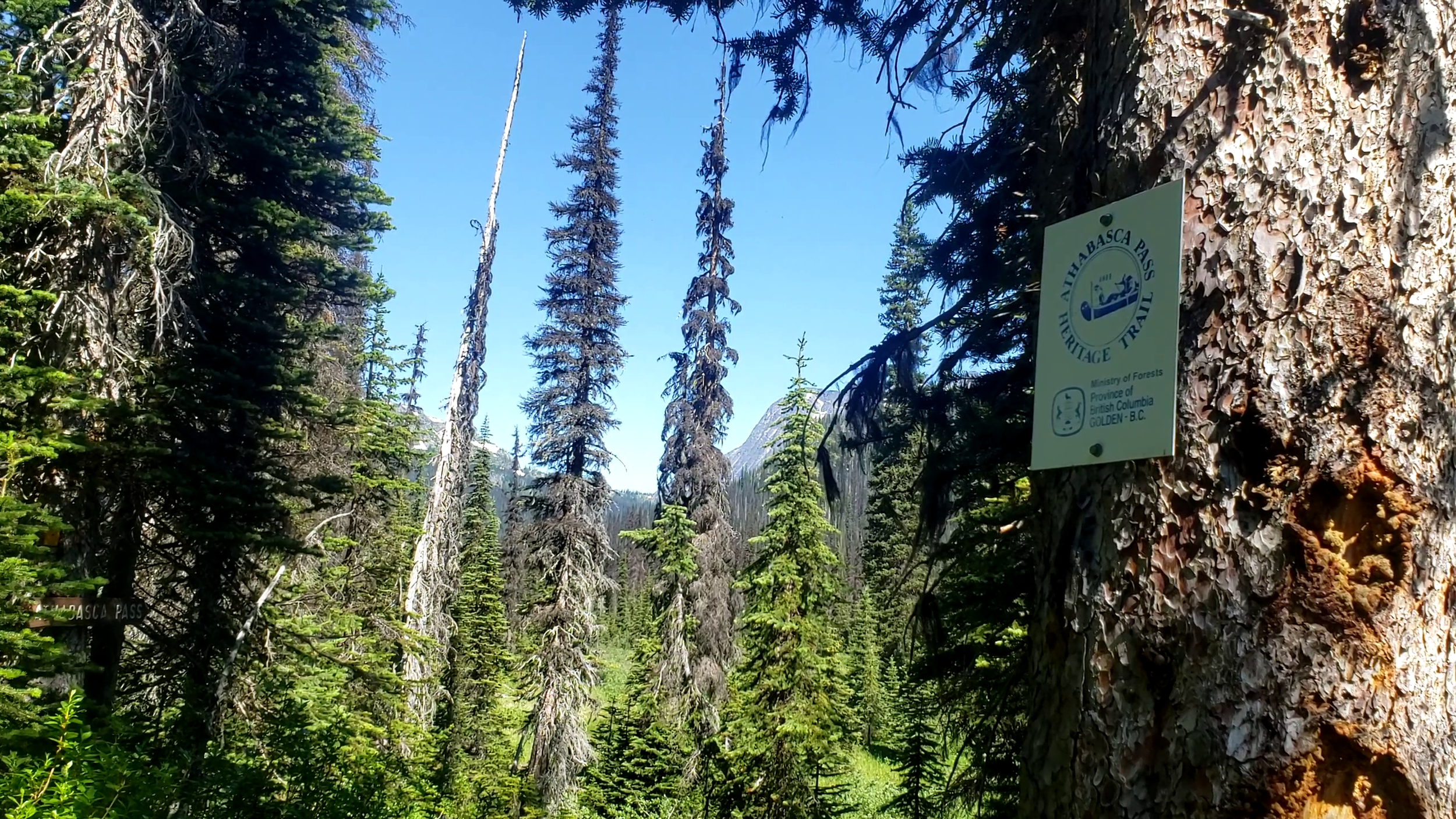
Day 5: Having reached the lofty heights of Athabasca Pass it is time to explore. Today we keep our tents set up and go on a day hike. There are many options depending on guest’s preferences from lounging around the lake to taking in the sights from a scenic treeline lookout. We return back to camp in the afternoon for a well-deserved feast and enjoy a peaceful mountain evening. [Distance: Variable. Elevation Gain/Loss: Variable.]
-
![]()
Day 6: Leaving Athabasca Pass we descend into British Columbia and follow an ancient trail descending towards the Kinbasket Resevoir. This is a rugged route that travels through old growth forest. Towering cedar trees lead us to our camp for the evening at the confluence of the Wood River and Jeffrey Creek (over 1000 metres lower than our previous camp!) . [Distance: 14 km. Elevation Gain/Loss: 150 m/1150 m.]
-
![]()
Day 7: Our last trail day takes us from Jeffrey Creek Campground to the edge of the Wood Arm of the Kinbasket Resevoir walking along old forest service roadways. Once at the shore of the resevoir we are picked up by boat and driven to the mountain town of Revelstoke where we have arranged hotel accommodation and a celebratory feast. [Distance: 13 km. Elevation Gain/Loss: 150 m/200 m.]
-
![]()
Day 8: After finishing our adventure and a refreshing night's sleep in Revelstoke we drive back to Jasper to finish our journey. Note if guests would prefer to make prior arrangements to depart from Revelstoke that can also be acceptable. The drive back to Jasper takes approximately 7 hours and travels through Glacier, Yoho, and Banff National Parks before returning to the Jasper Townsite.




Daily Itinerary
-
![]()
Day 1: Our trip starts in the Jasper Townsite with a morning meeting. Your guide will meet with all guests to discuss safety, and ensure all guests are using appropriate equipment. After the meeting we set off south of the Townsite driving for about 45 minutes to reach the trailhead. Our trip starts of gently, with travel on a wide-gravel road before branching onto a more conventional forested trail. Our first campground is Tie Camp, near the historic ruins of a fur-trade era cabin. [Distance: 12 km. Elevation Gain/Loss: 100 m/40 m.]
-
![]()
Day 2: After waking up to a hearty breakfast we set off on the trail starting off with great views of the Whirlpool River and distant peaks. Our challenge today is crossing Simon Creek, a glacially fed watercourse with a strong and chilly current. On the far side of Simon Creek, the trail becomes more wild as we work our way a further 16 km to the scenic Scott Glacier Campground. [Distance: 20 km. Elevation Gain/Loss: 140 m/20 m.]
-
![]()
Day 3: After breakfast our morning starts with a side-trip to view the Scott Glacier and the northern edge of the Hooker Icefield (one of a network of icefields that strattle the continental divide that marks the highpoint of the Rockies and the border between Alberta and British Columbia). After our side-trip we pack up our tents and carry on up the Whirlpool River valley passing by a roaring canyon and travelling through interesting undulating forest. Tonight we camp at Kane Meadows, named for renowned painter Paul Kane. [Distance: 11 km. Elevation Gain/Loss: 200 m/30 m.]
-
![]()
Day 4: On our fourth day of travel we ascend to reach Athabasca Pass itself. Travel can be slow in places and the ground cover can be quite muddy and moist. As we approach the pass there are impressive views looking up towards Mount Brown and Mc Gillivray Ridge, peaks that guard the flanks of the pass. Our camping area is just outside of Jasper National Park on a scenic bench overlooking the Committees Punch Bowl. [Distance: 10 km. Elevation Gain/Loss: 180 m/20 m.]
-
![]()
Day 5: Having reached the lofty heights of Athabasca Pass it is time to explore. Today we keep our tents set up and go on a day hike. There are many options depending on guest’s preferences from lounging around the lake to taking in the sights from a scenic treeline lookout. We return back to camp in the afternoon for a well-deserved feast and enjoy a peaceful mountain evening. [Distance: Variable. Elevation Gain/Loss: Variable.]
-
![]()
Day 6: Leaving Athabasca Pass we descend into British Columbia and follow an ancient trail descending towards the Kinbasket Resevoir. This is a rugged route that travels through old growth forest. Towering cedar trees lead us to our camp for the evening at the confluence of the Wood River and Jeffrey Creek (over 1000 metres lower than our previous camp!) . [Distance: 14 km. Elevation Gain/Loss: 150 m/1150 m.]
-
![]()
Day 7: Our last trail day takes us from Jeffrey Creek Campground to the edge of the Wood Arm of the Kinbasket Resevoir walking along old forest service roadways. Once at the shore of the resevoir we are picked up by boat and driven to the mountain town of Revelstoke where we have arranged hotel accommodation and a celebratory feast. [Distance: 13 km. Elevation Gain/Loss: 150 m/200 m.]
-
![]()
Day 8: After finishing our adventure and a refreshing night's sleep in Revelstoke we drive back to Jasper to finish our journey. Note if guests would prefer to make prior arrangements to depart from Revelstoke that can also be acceptable. The drive back to Jasper takes approximately 7 hours and travels through Glacier, Yoho, and Banff National Parks before returning to the Jasper Townsite.


Why Go Backpacking With Us?
A guided backpacking adventure is a great way to start out or keep building your backcountry travel skills. Guests choose guided adventures for many reasons including:
Simplifying logistics (we supply group camping gear, food, and all relevant permits)
Safety (guides are skilled in managing backcountry hazards and certified in advanced wilderness first aid and emergency responses)
Learning about the landscape (gain local knowledge about natural history, wildlife, and plants)
Skill building (learn better backcountry travel, navigation, and self-sufficient wilderness expertise)
Less stressful travel (guides help carry food and equipment, setting up camp, and locating all the best viewpoints)
Why Go Backpacking With Us?
A guided backpacking adventure is a great way to start out or keep building your backcountry travel skills. Guests choose guided adventures for many reasons including:
Simplifying logistics (we supply group camping gear, food, and all relevant permits)
Safety (guides are skilled in managing backcountry hazards and certified in advanced wilderness first aid and emergency responses)
Learning about the landscape (gain local knowledge about natural history, wildlife, and plants)
Skill building (learn better backcountry travel, navigation, and self-sufficient wilderness expertise)
Less stressful travel (guides help carry food and equipment, setting up camp, and locating all the best viewpoints)


-
![]()
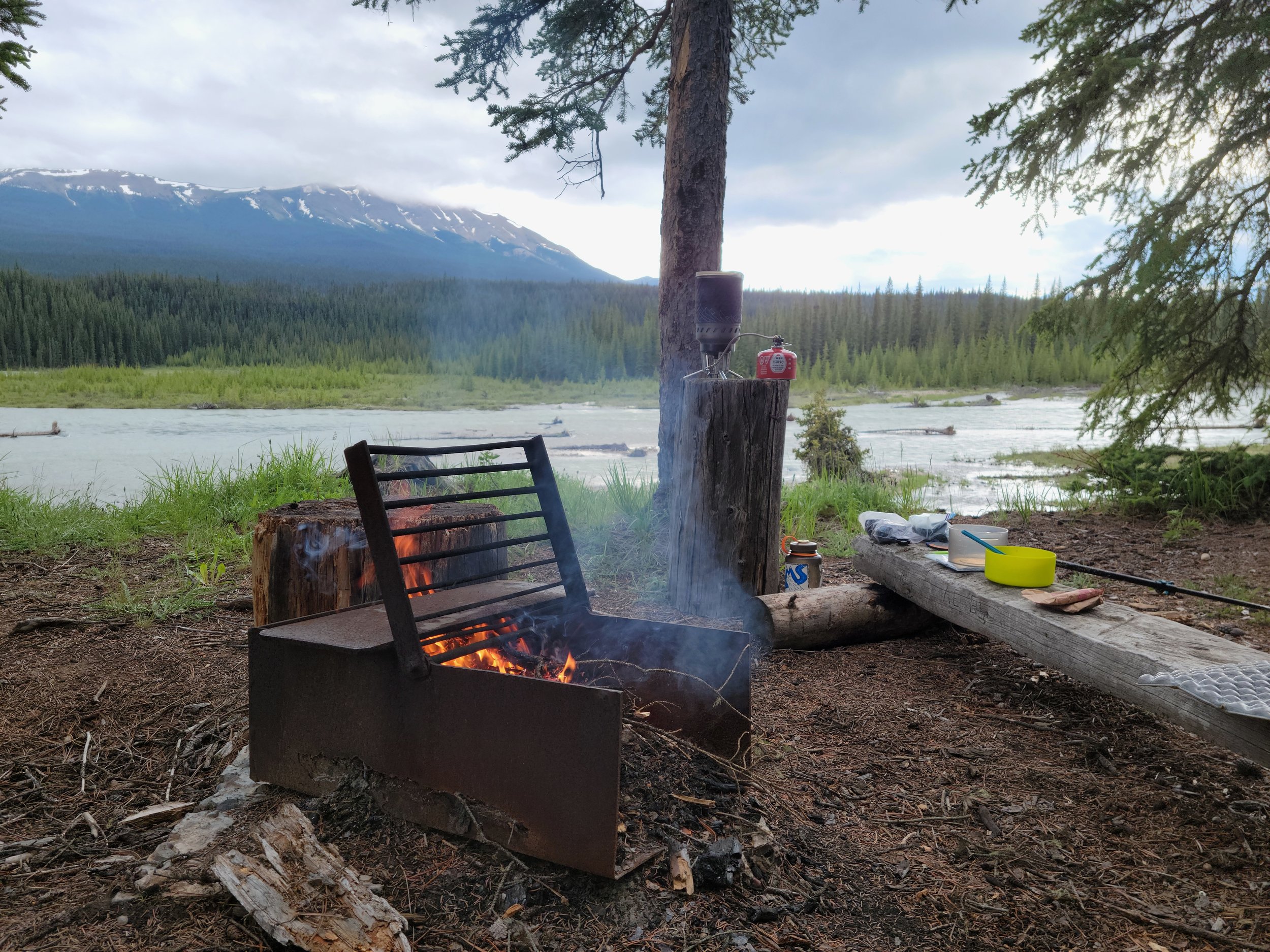
Rustic Campgrounds
-
![]()
Pristine Wilderness Along the Whirlpool River
General Adventure Info
What is Included?
Guiding
Park Visitor and Camping Fees
Food During the Adventure (breakfasts, lunches, dinners, and snacks)
Group Equipment (tents, sleeping pads, cooking gear, water treatment equipment, bear spray, tarps)
First Aid Equipment (carried by your guide)
Transportation To and From The Trailheads
What Does an Average Day on the Trail Look Like?
Life on the trail can be a bit different than what some people are used to. On a typical day, your guide will have breakfast prepared by 0730 and we will start hiking around 0900. We travel as a group for comradery and safety at a comfortable pace, and aim to reach our next camp around 1600. Dinner and desert follows around 1700 with personal free time in the evenings for picture taking, star-gazing, and soaking up the tranquility of the landscape. During the day we take breaks and lunch stops at scenic sites. We are generally travelling between 15-20 km per day (see the daily itinerary below for specific daily distances and elevations).
Required Personal Equipment:
Hiking Boots (previously used and well-fitted, waterproof boots are highly recommended)
Large Backpacking Backpack (we recommend between 60-75 L capacity, guests will be responsible for carrying a portion of group gear and food during the trip)
Sleeping Bag (for this adventure we recommend a 0C/32F rating, down sleeping bags are recommended over synthetic sleeping bags)
Pillow (a small dry-bag or commercially made backcountry pillow can enhance sleep and boosts overnight recovery)
Camera (there are an innumerably large number of excellent viewpoints along the route, and a camera with plenty of memory is highly recommended)
Sun Screen and Lip Balm (we recommend sun screen of 50 or higher SPF rating)
Headlamp (with new batteries)
Sunglasses (rated for UV protection)
Personal Medications and Blister Kit (any medications you take along with any personal blister products such as Moleskin)
Insect Repellent Spray
Personal Water Bottle/Bladder (1-2 L capacity is recommended, your guide will treat and carry any additional water as needed)
Hiking poles (collapsible)
How Should I Prepare?
How much training you need depends on many factors. Wherever you are starting from, it is a good plan to start walking and hiking several months before your adventure and gradually increase pack weight during your training. Walking up stairs with a weighted pack is a great way to get your legs ready to traverse scenic mountain passes. Look at the itinerary below for a day-by-day breakdown of this adventure.
Are There Any Risks?
Any travel in the mountains comes with some risks. All guests will be required to read, understand, and agree to our Release of Liability, Waiver of Claims, Assumptions of Risks and Indemnity Agreement which fully details risks associated with this adventure.
If you have any additional questions, please Contact Us.
Required Personal Clothing:
Waterproof Jacket (well-fitted to allow for movement and breathable)
Waterproof Pants (“rain pants” with full length zippers to allow for easy transitions are recommended)
Insulated Jacket (to be worn around camp on chilly mornings and evenings)
Insulated Pants (“long underwear” or a similar layer to cover legs while at camp or on the move)
Base Layers (top and bottom, breathable synthetic or wool material)
Hiking Shirt and Pants (for wearing while travelling, NO COTTON MATERIALS)
Socks (synthetic or wool, bring at least two well-fitted pairs)
Hat (baseball style cap for wearing while travelling)
Insulated Hat (synthetic or wool toque or cap for wearing at camp)
Camp Shoes (lightweight footwear to wear around camp or use during creek crossings)
Insulated Gloves (synthetic or wool, quick drying recommended)
What is Not Included?
Accommodation in the Jasper Townsite
Food while in the Jasper Townsite
Personal Equipment (see list on the right)
Gratuities
General Adventure Info
What is Included?
Guiding
Park Visitor and Camping Fees
Food During the Adventure (breakfasts, lunches, dinners, and snacks)
Group Equipment (tents, sleeping pads, cooking gear, water treatment equipment, bear spray, tarps)
First Aid Equipment (carried by your guide)
Transportation To and From The Trailheads
What Does an Average Day on the Trail Look Like?
Life on the trail can be a bit different than what some people are used to. On a typical day, your guide will have breakfast prepared by 0730 and we will start hiking around 0900. We travel as a group for comradery and safety at a comfortable pace, and aim to reach our next camp around 1600. Dinner and desert follows around 1700 with personal free time in the evenings for picture taking, star-gazing, and soaking up the tranquility of the landscape. During the day we take breaks and lunch stops at scenic sites. We are generally travelling between 15-20 km per day (see the daily itinerary below for specific daily distances and elevations).
Required Personal Equipment:
Hiking Boots (previously used and well-fitted, waterproof boots are highly recommended)
Large Backpacking Backpack (we recommend between 60-75 L capacity, guests will be responsible for carrying a portion of group gear and food during the trip)
Sleeping Bag (for this adventure we recommend a 0C/32F rating, down sleeping bags are recommended over synthetic sleeping bags)
Pillow (a small dry-bag or commercially made backcountry pillow can enhance sleep and boosts overnight recovery)
Camera (there are an innumerably large number of excellent viewpoints along the route, and a camera with plenty of memory is highly recommended)
Sun Screen and Lip Balm (we recommend sun screen of 50 or higher SPF rating)
Headlamp (with new batteries)
Sunglasses (rated for UV protection)
Personal Medications and Blister Kit (any medications you take along with any personal blister products such as Moleskin)
Insect Repellent Spray
Personal Water Bottle/Bladder (1-2 L capacity is recommended, your guide will treat and carry any additional water as needed)
Hiking poles (collapsible)
How Should I Prepare?
How much training you need depends on many factors. Wherever you are starting from, it is a good plan to start walking and hiking several months before your adventure and gradually increase pack weight during your training. Walking up stairs with a weighted pack is a great way to get your legs ready to traverse scenic mountain passes. Look at the itinerary below for a day-by-day breakdown of this adventure.
Are There Any Risks?
Any travel in the mountains comes with some risks. All guests will be required to read, understand, and agree to our Release of Liability, Waiver of Claims, Assumptions of Risks and Indemnity Agreement which fully details risks associated with this adventure.
If you have any additional questions, please Contact Us.
Required Personal Clothing:
Waterproof Jacket (well-fitted to allow for movement and breathable)
Waterproof Pants (“rain pants” with full length zippers to allow for easy transitions are recommended)
Insulated Jacket (to be worn around camp on chilly mornings and evenings)
Insulated Pants (“long underwear” or a similar layer to cover legs while at camp or on the move)
Base Layers (top and bottom, breathable synthetic or wool material)
Hiking Shirt and Pants (for wearing while travelling, NO COTTON MATERIALS)
Socks (synthetic or wool, bring at least two well-fitted pairs)
Hat (baseball style cap for wearing while travelling)
Insulated Hat (synthetic or wool toque or cap for wearing at camp)
Camp Shoes (lightweight footwear to wear around camp or use during creek crossings)
Insulated Gloves (synthetic or wool, quick drying recommended)
What is Not Included?
Accommodation in the Jasper Townsite
Food while in the Jasper Townsite
Personal Equipment (see list on the right)
Gratuities
Price, Schedules, and Logistics
-
Be sure to read our Payment and Cancellation Policy below before confirming registration.
All prices are listed in Canadian Dollars. Exchange from foreign currencies will be conducted by our PayPal (our Payment Processor).
Starry Summit Mountain Adventures also accepts Bitcoin. If you are interested in paying for your adventure in Bitcoin please specify this on your booking request form below.
-
Each adventure has a minimum number of guests for it to run listed on the dates column in the left. Programs are assessed for enrollment 90 days before the departure date. If a given program is below the minimum threshold value enrolled guests will be given the option of paying an under-enrollment offset fee to continue with the adventure otherwise they will receive a full refund. See the link on the left for detailed policies.
-
This trip will start with an orientation in the Jasper Townsite the night before the first day of the program. Transportation will be provided to and from the Jasper Townsite. Guests are advised to make arrangements to store any extra luggage or baggage with their hotel/lodging while they are away on their adventure.
-
If you are interested in this adventure, please fill out the form below. Starry Summit Mountain Adventures staff will be in touch and go over trip equipment, costs, and logistics. Full payment is due upon confirmation of trip enrollment.
Cancellation Policy and Refunds: Guests are allowed to cancel their booking and receive a full refund up to 90 days before the start of an adventure. If guests cancel their booking with less than 90 days prior to the start of the adventure refunds diminish in a progressive manner. See the link on the left for details or your trip confirmation details received upon booking.
-
All guests will be required to sign a “Release of Liability, Waiver of Claims, Assumptions of Risks and Indemnity Agreement” commonly referred to as the “waiver” before starting an adventure. Waivers are available for download and will be provided to you upon confirmation of booking. Paper waivers will also be signed on the first day of each SSMA adventure. If any guest is unwilling to sign the waiver they will not be able to participate in the adventure. Any guests not of the age of majority (18 in Alberta) will require a guardian to sign on their behalf.
-
New for the Summer 2025 hiking season we are starting a rewards program for returning clients!
The more distance you have hiked on our guided trips in the previous year, the more rewards you receive this year. If you are a returning client we'll crunch the numbers (distance values are calculated from the values given in the trip itineraries) and let you what discount you can receive.
See this link for details (https://www.starrysummit.ca/rewards).
Adventure Dates (Summer 2025, Minimum 2 Guests, Maximum 4 Guests):
Send Us A Message Below To Inquire About Custom Dates For This Trip.


Payment is processed in Canadian Dollars. We also accept Bitcoin (see tab above for details).
Price, Schedules, and Logistics
-
Be sure to read our Payment and Cancellation Policy below before confirming registration.
All prices are listed in Canadian Dollars. Exchange from foreign currencies will be conducted by our PayPal (our Payment Processor).
Starry Summit Mountain Adventures also accepts Bitcoin. If you are interested in paying for your adventure in Bitcoin please specify this on your booking request form below.
-
Each adventure has a minimum number of guests for it to run listed on the dates column in the left. Programs are assessed for enrollment 90 days before the departure date. If a given program is below the minimum threshold value enrolled guests will be given the option of paying an under-enrollment offset fee to continue with the adventure otherwise they will receive a full refund. See the link on the left for detailed policies.
-
This trip will start with an orientation in the Jasper Townsite the night before the first day of the program. Transportation will be provided to and from the Jasper Townsite. Guests are advised to make arrangements to store any extra luggage or baggage with their hotel/lodging while they are away on their adventure.
-
If you are interested in this adventure, please fill out the form below. Starry Summit Mountain Adventures staff will be in touch and go over trip equipment, costs, and logistics. Full payment is due upon confirmation of trip enrollment.
Cancellation Policy and Refunds: Guests are allowed to cancel their booking and receive a full refund up to 90 days before the start of an adventure. If guests cancel their booking with less than 90 days prior to the start of the adventure refunds diminish in a progressive manner. See the link on the left for details or your trip confirmation details received upon booking.
-
All guests will be required to sign a “Release of Liability, Waiver of Claims, Assumptions of Risks and Indemnity Agreement” commonly referred to as the “waiver” before starting an adventure. Waivers are available for download and will be provided to you upon confirmation of booking. Paper waivers will also be signed on the first day of each SSMA adventure. If any guest is unwilling to sign the waiver they will not be able to participate in the adventure. Any guests not of the age of majority (18 in Alberta) will require a guardian to sign on their behalf.
-
New for the Summer 2025 hiking season we are starting a rewards program for returning clients!
The more distance you have hiked on our guided trips in the previous year, the more rewards you receive this year. If you are a returning client we'll crunch the numbers (distance values are calculated from the values given in the trip itineraries) and let you what discount you can receive.
See this link for details (https://www.starrysummit.ca/rewards).
Adventure Dates (Summer 2025, Minimum 2 Guests, Maximum 4 Guests):
Send Us A Message Below To Inquire About Custom Dates For This Trip.
Payment in Canadian Dollars. We also accept Bitcoin (see tab above for details).
Book Today
Drop us a line commitment-free to see if this adventure is right for you. Please see our Payment and Cancellation Policy, Waiver, and Minimum Enrollment Policy above.
Book Today
Drop us a line commitment-free to see if this adventure is right for you. Please see our Payment and Cancellation Policy, Waiver, and Minimum Enrollment Policy above.